

Modern Website Design Is a Disaster
And Why “Less” Is the Only Strategy That Actually Works
There is a quiet frustration shared by millions of internet users every day. You click a link, wait for the page to load, and then – before you can read a single word – a pop-up asks you to subscribe to a newsletter. You close it. An animated banner slides in from the left. A chatbot bubble bounces in the corner. A cookie consent wall appears. A countdown timer pulses urgently. And somewhere, buried beneath all of this noise, is the information you came for.
You leave. You always leave.
This is the state of a large portion of the web today, and if you are planning to build a website for your business, you need to understand why this happened – and how to avoid the same costly mistakes.
How Did We Get Here?
The answer is surprisingly simple: too many tools, too little thought.
In recent years, website design has become technically accessible to almost anyone. Page builders, templates, and AI-powered tools can generate a fully animated, visually busy website in a matter of hours. Search engines and advertising platforms encourage adding more content, more buttons, and more calls-to-action. The promise is: more elements equal more engagement.
The reality is the opposite:
Every single visual effect or animation is simply a distraction from your website’s content and the message you are trying to share.
When everyone can produce a website overnight, and when all those tools default to the same flashy templates, the result is a flood of websites that look remarkably similar – and are remarkably ineffective. Entrance animations, hover effects, dynamic transitions, scrolling counters, and auto-playing videos. And lots of empty white spaces and huge fonts. Sounds familiar? Features that were once considered impressive have become visual noise, and visual noise drives visitors away.
The Attention Problem Nobody Talks About
Here is something worth writing on a wall: your visitor’s attention is the most fragile thing your website touches.
The average person visiting your website for the first time has arrived with a question, a need, or a curiosity. They are giving you perhaps thirty seconds to demonstrate that you can help them. What they encounter in those thirty seconds will determine whether they stay or go.

An animated number counter ticking upward to “15k satisfied clients” does not answer their question. A pop-up offering a discount code does not answer their question. A full-screen video playing automatically certainly does not answer their question.
What answers their question is clear, well-written content, presented in a readable way, with a logical structure they can follow. That is it. That is the entire strategy.
The CTA Trap
Walk through any popular website template today and you will encounter what designers call CTAs – calls-to-action. Buy now. Subscribe. Download. Register. Click here. Get started.
These buttons have their place. But somewhere along the way, the industry decided that more CTAs equal more conversions, and template designers began inserting them at every paragraph, every section, every scroll position. The underlying assumption is insulting: that your visitors are passive, directionless, and incapable of making a decision without a flashing button telling them what to do next.

Well-designed websites trust their visitors. They provide good information, they make navigation intuitive, and they allow the visitor to reach their own conclusions. A business that treats its website visitors as intelligent adults will always outperform one that bombards them with urgency.
The Mobile Reality Check
There is one more dimension to this problem that makes everything worse.
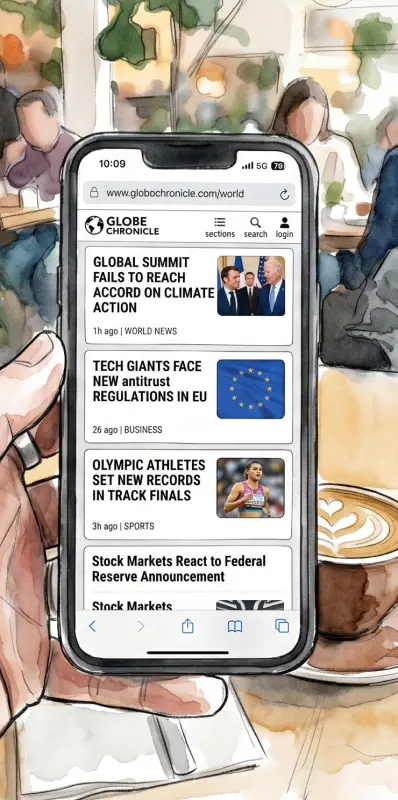 Most of your visitors – in Cambodia, across Southeast Asia, and globally – will visit your website on a mobile phone. All of those elaborate multi-column layouts, side-by-side animations, and desktop-optimised theatrics collapse into a single scrolling column on a phone screen.
Which means that the elaborate visual experience a designer spent weeks building is simply not what most visitors see. What they see is a long, slow-loading scroll of stacked elements, pop-ups that are difficult to close on a small screen, and text that competes with decoration for their attention.
The websites that perform best on mobile are the ones designed with content as the priority from the beginning – not as an afterthought.
What Actually Works
High-quality publishing websites, established media outlets, and respected brands have largely ignored the flashy design trends of the past decade. They follow a quieter set of principles:
- Content first. The text, the images, the information – these are the reasons someone came to your website.
- Readable typography. A well-chosen font, appropriate size, and comfortable line spacing make text a pleasure to read rather than a chore.
- Structure over decoration. A clear layout guides visitors naturally. Decoration without structure creates confusion.
- Restrained motion. If something moves on your website, it should have a reason. Movement without purpose is distraction.
- Fast loading. Every additional animation, script, and plugin slows your website down. Slow websites lose visitors before the page even finishes loading.
- Low cognitive load. The visitor should never have to work to understand your website. Simplicity is a form of respect.
These are not radical ideas. They are the principles that have defined good communication design for decades, applied to the web.
The Philosophy That Changes Everything
There is a telling contrast between two approaches to web design.
The first approach says: the interface is the experience. The website itself – its animations, its effects, its visual complexity – is what impresses visitors. This is the advertising approach – design made for ads and leaflets.
The second approach says: the interface should disappear and let the content speak. The design exists to deliver information clearly and efficiently, then get out of the way – design made for corporations, institutions, and businesses.
For a small business in Cambodia building its first website, the second approach is not just philosophically preferable – it is commercially smarter. A website that loads quickly, communicates clearly, and respects the visitor’s time will outperform a visually impressive website that frustrates and distracts.
Your visitors are not coming to admire your website. They are coming to find out whether you can solve their problem. Make it easy for them to find that answer, and they will stay. Make it difficult, and they will not come back.
Clean design is not a limitation. It is a competitive advantage – and in a region where digital businesses are growing fast, it may be the most important decision you make about your online presence.
Contact us for your free consultation or request a free custom quote below:
* * * * *
REQUEST A FREE QUOTE

Why “Nice” Website Design Isn’t Relevant Anymore – And What Actually Matters
This article is part of our series on practical website strategy for small businesses, institutions, and corporations.
Your comments are always welcome on our Facebook page, where we share all our articles.